
Free-flow toll systems, also known as barrier-free tolls, are radically transforming the way motorists travel on toll roads. By 2025, this technology will be an effective solution for smoothing traffic flow, reducing queues, and providing a more seamless driving experience. The rise of solutions such as Liber-T, Bip&Go, EasyTrip, and Péage Express is giving a new lease of life to French roads, where the transition to a fully digital network is already being tested in several regions. This development is rapid and is driven by a strong desire to simplify users’ lives while improving the financial management of motorway companies.
The precise operation of free-flow tolls: how they will work in 2025
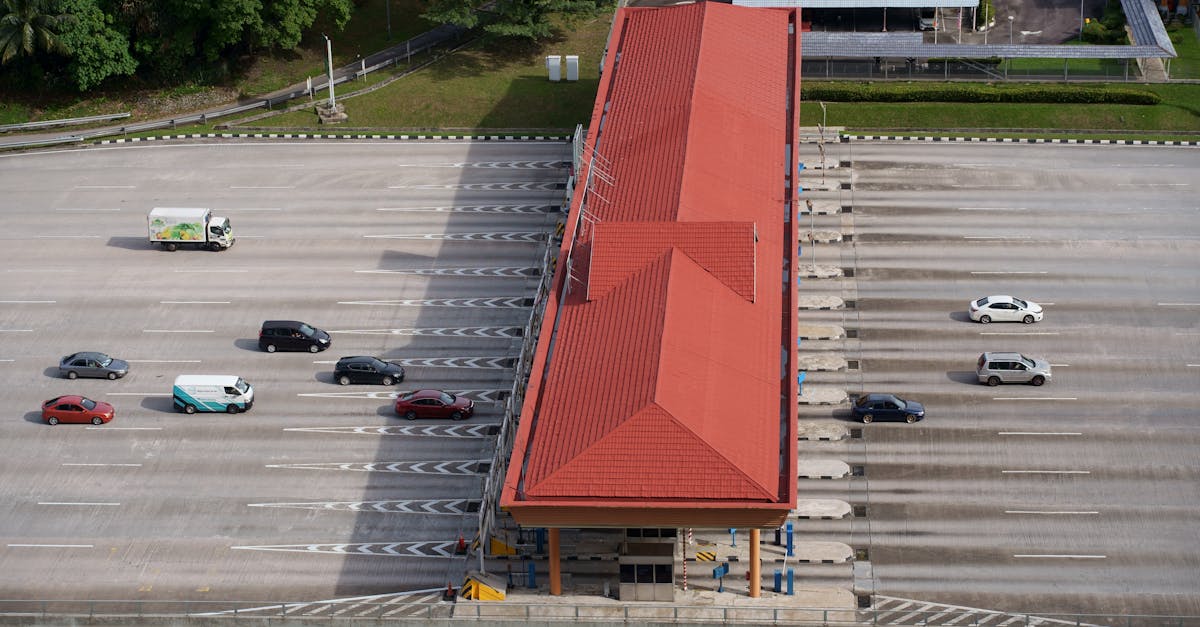
The central principle of free-flow tolls is based on the installation of gantries equipped with cameras, sophisticated sensors, and automatic recognition software. When a vehicle passes under these gantries, the technology instantly identifies the license plate. If a toll badge such as Viamobil, PassPass, or Flash Télépéage is activated on the vehicle, payment is made automatically, without the driver having to do anything. The majority of users now use these subscriptions, as their simplicity and speed offer a real revolution in toll management.
For those without a badge, two main options are available: first, online connection via the operator’s website, such as Sanef, to register the license plate and pay by credit card or other electronic means. The second method involves paying at Nirio-approved tobacconists, which have nearly 4,000 points of sale, with a 72-hour turnaround time for the transaction—a welcome flexibility for those who prefer physical payment. The increasing complexity of these payment systems facilitates management while limiting the need to stop.

Steps to understanding how free-flow will work in 2025
To master this system, here are the main steps:
- Automatic identification: Optical recognition using cameras and sensors detects each vehicle passing through the toll zone. License plate recognition:
- OCR (optical character recognition) technology records the license plate with increased accuracy. Payment verification:
- If the vehicle is equipped with a compatible badge, payment is processed in real time, ensuring smooth traffic flow. Seamless regularization:
- For vehicles without a badge, the procedure is completed online or by paying at a tobacconist within 72 hours. Non-payment management:
- In the event of late payment, an automated reminder procedure and a €375 fine are triggered, reinforcing regulatory rigor. This system offers an unprecedented experience, where fluidity is gradually prioritized in all areas equipped with innovative sensors, resulting in considerable time savings. The gradual removal of traditional toll barriers marks a decisive step towards smarter, free-flow mobility.
Key components of free-flow tolls
| Features | Recognition cameras |
|---|---|
| 📷 License plate identification through automatic reading | Sensors |
| ⚙️ Passage detection and vehicle presence verification | Management software |
| 💻 Data control and processing for instant or deferred payment | What payment methods will motorists adopt in 2025 for free-flow tolls? |
At the heart of toll modernization, several solutions coexist, offering a multitude of choices adapted to each user profile. The majority of drivers opt for automatic solutions, such as
Libert-T , Bip&Go, orViapass , which allow for payment without stopping or handling. These subscriptions, often combined with devices that attach to the windshield, offer unparalleled peace of mind, avoiding any stress upon arriving at a free-flow gate.For others, the digital solution via a website or mobile app is preferred, although, to date, no specific application is available for managing immediate payments. Sanef’s platform, for example, allows license plates to be recorded and payments to be made easily by credit card or prepaid account. This is an essential step in expanding access to these systems and avoiding unnecessary fines.
Discover the world of tolls with our comprehensive guide on the different types of tolls, their costs, and how to optimize your journeys. Learn about innovations and regulations regarding tolls for worry-free travel. Options for paying tolls freely in 2025: Electronic toll badges:
Online payment:
- via the Sanef website, where you simply enter your license plate, select your payment method, and pay online. Payment at authorized tobacconists:
- Nirio, with the option to pay up to 72 hours after payment, convenient for those who prefer physical payment. Hybrid solutions:
- A combination of the two methods for greater flexibility. Payment Methods Advantages
- Toll Ring or Electronic Toll Box Time Saving, Convenience, Automatic Payment 🚗
| Online Payment | Flexibility, Simplicity, Paperless Management |
|---|---|
| Payment at Nirio Tobacco Store | Physical Option, 72-Hour Payment Time, Security |
| Challenges and Constraints Related to the Deployment of Free-Flow Toll Collection in 2025 | While this new payment method represents undeniable progress, it also raises significant technical, legal, and social challenges. Implementing a 100% reliable automatic toll recognition system requires massive investment in high-tech infrastructure. Recognition errors or billing disputes can quickly arise, requiring managers to develop effective settlement mechanisms. |
| Furthermore, the issue of security and personal data protection is becoming central. The mass collection of license plates requires a rigorous framework to prevent any abuse or misuse. European legislation, effective 2025, already imposes strict limits that must be respected by all operators, often specialized in the processing of this sensitive data. | Discover our complete guide to tolls in France: information on rates, the roads concerned, and tips for a stress-free journey. |
The risks of non-payment and their management in 2025
Despite the sophistication of the systems, some drivers may forget to pay or encounter technical difficulties. For these situations, an automated procedure is in place: after 72 hours, Sanef queries the registration file and sends a letter to the address linked to the license plate.
The first reminder is sent without surcharge, offering an additional 10 days to rectify the situation. After this deadline, a €10 penalty applies if payment is made within the next 15 days. After two months, the case is transferred to government services, where a €375 fine can be imposed, as with any serious traffic violation. The management of these disputes demonstrates the extent to which the transition requires clear regulations and increased technical expertise.
Actions
72 hours after payment
Automatic verification, mail reminder
| 15 days after reminder | €10 surcharge, payment possible |
|---|---|
| After 2 months | Transfer to government services, €375 fine |
| The tangible benefits of free-flow toll collection: time savings and smoother flow | The deployment of barrier-free toll collection, particularly on key routes such as Paris-Caen and Mantes-la-Jolie, significantly reduces waiting times. According to Sanef, between Paris and Caen, approximately 30 minutes of travel time are saved, a real benefit for daily life and adherence to schedules. |
| This change is accompanied by increased convenience for drivers: no more need to queue at booths, no more risk of forgetting to pay, or arriving in a confusing queue. The improved flow also benefits infrastructure managers, who can better distribute traffic, modernize their network, and prepare for the mobile future by integrating solutions such as payment solutions or fare calculations. | Challenges Remaining for Full Rollout by 2025 |
Although the technology is mature, the transition to 100% barrier-free toll collection requires a cultural and logistical change. Some areas remain poorly equipped, which further limits the extent of deployment. The absolute reliability of the systems remains to be confirmed under various conditions, particularly in bad weather or during incidents.
Questions also remain: how to manage undeclared or foreign vehicles? Legislation must continue to evolve to cover these specific cases. The political will is clear: by 2025, the majority of major roads must operate entirely in free flow mode, but the road to this total automation is still fraught with pitfalls. This is an essential step; the desire to reduce pollution, costs, and road congestion is unprecedented since the first paved roads were built.
Problems related to widespread implementation Details Inadequate infrastructure Areas still poorly equipped for free flow modeTechnological reliability
Optical recognition sometimes deficient in difficult conditions
Legislation and Security
Data Protection and Non-Payment Management
| Upcoming Innovations to Improve the Fluidity of Free-Flow Tolls | 2025 does not mark the end of innovations in this field. Research is focusing on solutions integrating artificial intelligence, 5G, and connected objects. The goal is to create an environment where each vehicle could comply with a data exchange system, allowing for even faster and more secure passage. Synchronizing these technologies could also further reduce other operational costs for highway managers. |
|---|---|
| Furthermore, experiments are underway to integrate augmented reality into traffic management and vehicle recognition to improve the accuracy and speed of passage. Complete digitalization could also allow users to pay using innovative methods, such as blockchain or cryptocurrency, thus offering a fully decentralized and secure experience. The trend toward fully digital and automated tolls continues to accelerate. Flagship projects for a barrier-free motorway network in 2025 | Several major projects are under study or being implemented, including: |
| French MotoGP Grand Prix network, connected and automated, to manage traffic congestion during major sporting events 🏁 | |
| Extension of the Express Toll System |
for all high-density urban areas ✅
Installation of new sensors and cameras in sensitive areas to ensure seamless detection and regulation 🔧
Deployment of Viapass technology in all French regions, integrating a single portal for free-flow payment 🤝
- FAQ: Everything you need to know about free-flow tolls in 2025
- Is a badge required to use free-flow tolls? No, it is possible to register your license plates and pay online, but the badge offers additional convenience and a seamless experience. What are the risks of non-payment?
- A fine of €375, plus possible surcharges, as well as the risk of administrative blocking of the license plate.
- Will free-flow zones still be chargeable in 2025? Yes, but their widespread deployment aims to make these zones accessible 24/7, by integrating all modern payment solutions. Can you pay in cash using these systems?
Yes, at Nirio-approved tobacconists, with a 72-hour waiting period, but this is tending to decrease with the rise of electronic payment.
- How secure is our personal data?
- Operators adhere to strict European legislation, guaranteeing confidentiality and data protection.