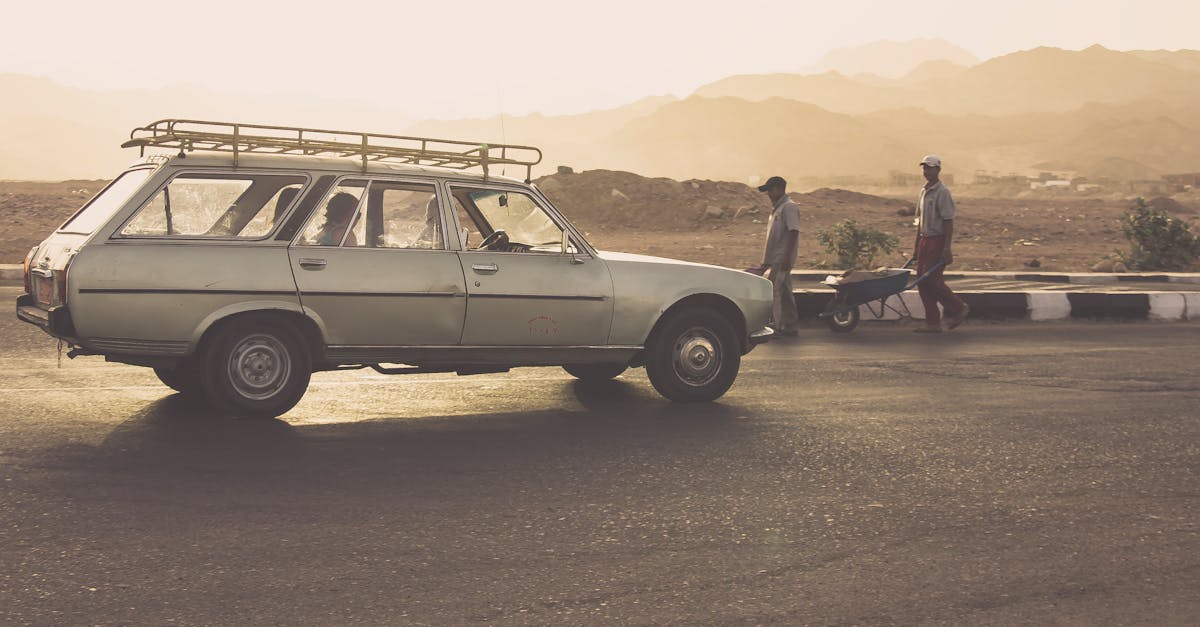
With conflicts in Ukraine and international geopolitical issues occupying a prominent place in the news, rumors are circulating about the possibility of a new Peugeot P4 model for the French armed forces. This idea, while attractive to some, lacks solid foundation and deserves to be examined from several angles. Between nostalgia for a historic vehicle and the reality of the contemporary military market, let’s examine what a possible return of the Peugeot P4 could look like in what one might consider unlikely circumstances.
- The Origins of the Peugeot P4
- The Current Military Context in Ukraine
- Rumors Surrounding a New Peugeot P4 Model
- Existing Alternatives on the Market
- The Challenges and Issues of a New Military Vehicle in France
The Origins of the Peugeot P4
The Peugeot P4 has its roots in the 1980s, at a time when the needs of the French military were rapidly evolving. Produced between 1982 and 1992, this model was directly inspired by the famous Mercedes Gelandewagen, a vehicle renowned for its robustness and field efficiency. The P4, assembled in Sochaux by Peugeot under license, established itself as a multi-faceted military vehicle thanks to its design adapted to the requirements of the French army. Peugeot’s choice to produce the P4 was not insignificant. At the time, the French manufacturer was able to meet precise military specifications, incorporating technical features that allowed the vehicle to navigate rough terrain while transporting troops and equipment. The P4’s popularity within the military led to its widespread adoption, with nearly 6,000 units produced during this period. This initial success left a lasting mark on the history of French military vehicles, with nostalgia that persists to this day. Year Main Event 1982Launch of the Peugeot P4 1992 End of model production
2000 Beginning of replacements with other models A four-wheel-drive vehicle like the P4 is designed not only for military use, but also for its reliability as an off-road vehicle in difficult conditions. Comparing its design with its modern predecessor, the Mercedes G230, reveals notable differences in evolution. While the G230 has been transformed into a luxury SUV, the P4 retains its rugged identity, a characteristic respected by military history buffs. The Current Military Context in Ukraine The war in Ukraine, which has been ongoing since early 2022, has exacerbated the defense needs of European countries. With rising tensions and the need to quickly equip themselves to meet the demands of the conflict, several countries are scrutinizing their military equipment. France and its allies, in particular, are considering how to increase their military capabilities while integrating modern technologies.
| Traditional military vehicles must be more than just a means of transportation; they must adapt to new conflict scenarios, varied terrain, and very different engagement situations. The situation in Ukraine has demonstrated that vehicles must be not only robust, but also easily deployable and versatile. Priorities are changing. Indeed, modern armies often require vehicles capable of transporting troops, transporting logistical equipment, and leveraging advanced communications technologies, meeting cutting-edge needs. | Necessary Adaptations for Modern Conflict 🚀 |
|---|---|
| Advanced Technology and Weaponry 🛠️ | Troop Mobility and Protection 🛡️ |
| Stories of military victory also involve sound logistical decisions. While artillery and advanced range systems play a central role in the field, transporting soldiers, especially in conflict zones, requires reliable vehicles. However, some speculation suggests that the modern P4 could meet these challenges by redesigning its architecture, but a serious analysis leaves little room for fantasy. | Rumors of a New Peugeot P4 Model |
| With a constantly evolving military environment, rumors circulate about the possibility of a new Peugeot P4 model, but these speculations often seem unfounded. Indeed, some media outlets are reporting developments surrounding a « revamped » Peugeot P4 for the French forces, but such a move is not supported by any official announcement. These rumors sometimes emerge in response to discussions about the military’s ability to reinvest in French models, due to the lack of a truly military vehicle to replace the AMCAT VT4, currently in use. | The narrative surrounding this rumor is appealing, as it evokes a return to a form of national pride as well as an opportunity to reconnect with a classic French automobile. However, when analyzed in reality, a modern Peugeot P4 would have difficulty coexisting with the real needs and constraints imposed by a modern warfare context. Moreover, the technologies and features required of a modern military vehicle are now far more complex than they were in the 1980s. Issues of energy efficiency, resilience to threats, and digital behavior to interact with current communications technologies require a complete transformation of the design. |
Appearance Peugeot P4 (History) New model imagined
Real current need
Off-road capabilities
Robust
- Sporty
- Adaptable to varied terrain
- Technology
Minimal
Modern
Advances in communication
Military use
| Limited | Versatile | Logistics and transportation | While curiosity about a classic design is legitimate, the opportunities to transform a proven model into a contemporary military vehicle prove more complex than simple cosmetic adjustments. The complexity of such a project often undermines the identification of its true expectations. Indeed, reviving an old model without significant adaptation to modern trends could be perceived as an outdated approach. |
|---|---|---|---|
| Existing alternatives on the market | In the current context, it cannot be ignored that several models have already taken over from the legendary military vehicles, including the AMCAT VT4, which has a significant market share. Designed to replace the Peugeot P4, this vehicle features features designed to meet the contemporary needs of modern armies. | The AMCAT VT4 is a vehicle that leverages modern technology while meeting the safety and performance standards required by the military. In terms of modularity, it is significantly more efficient than its predecessor. Furthermore, it is designed in part with components produced abroad, which raises the question of the strategic autonomy of the French armed forces on the military level. | Operational Capabilities ✅ |
| Innovation and Modern Technology 🚀 | International Manufacturing and Logistics 🌍 | As various countries reorient their automotive industries to meet new challenges, the military market is seeking solutions outside of traditional models. France, far from promoting the return of the P4, seems to be seeking to bring together elements of modernity, both technologically and innovatively. | The Challenges and Issues of a New Military Vehicle in France |
| Reintroducing a model such as the Peugeot P4 into the French military industry would pose several challenges. First, the development of a new military vehicle must be accompanied by a clear understanding of current strategic requirements. While nostalgia for the P4 persists, it must be recognized that the real military challenges of today are nothing like those of yesterday. | Deployment and mobility capabilities, intelligent connectivity, and robustness against contemporary threats are all key considerations. The challenges also include ensuring a rapid response to the needs for armed systems, all without neglecting the imperatives of local manufacturing, however desirable this may be. Challenge | Modern Military Demands | Development |
Speed and Efficiency
Technology
Advanced Systems Integration LogisticsLocal Procurement
Ultimately, the debate surrounding a new Peugeot P4 raises essential questions about the future direction of the French armed forces. Rather than simply returning to a historical model, the focus should be on seeking innovations that lead to tailored solutions capable of fulfilling critical missions on the modern battlefield.
- https://www.youtube.com/watch?v=tbUxtGaDplc
- FAQ
- 1. Why are there rumors about a new Peugeot P4?
The rumors can be attributed to nostalgia for older models and the desire to relocate military manufacturing to France in the context of current tensions.
2. What vehicle is currently replacing the Peugeot P4?
The AMCAT VT4 was designed to replace the P4 and meets modern military standards. 3. What are the main challenges for a new military vehicle in France? The challenges include speed of development, the integration of advanced technologies, and local procurement.
4. Is a return to the P4 feasible?
| A return to the P4 in its original form seems unlikely, given contemporary military equipment requirements. | 5. What are the needs of the French army today? |
|---|---|
| The needs include vehicles capable of deploying troops quickly and equipped with modern communications and logistics technologies. | Discover the Peugeot P4, an iconic all-terrain vehicle, combining robustness and performance. Designed for adventurers and professionals, it offers exceptional handling on all types of terrain. Immerse yourself in the world of the Peugeot P4 and explore its unique features that make it an ideal choice for your expeditions. |
