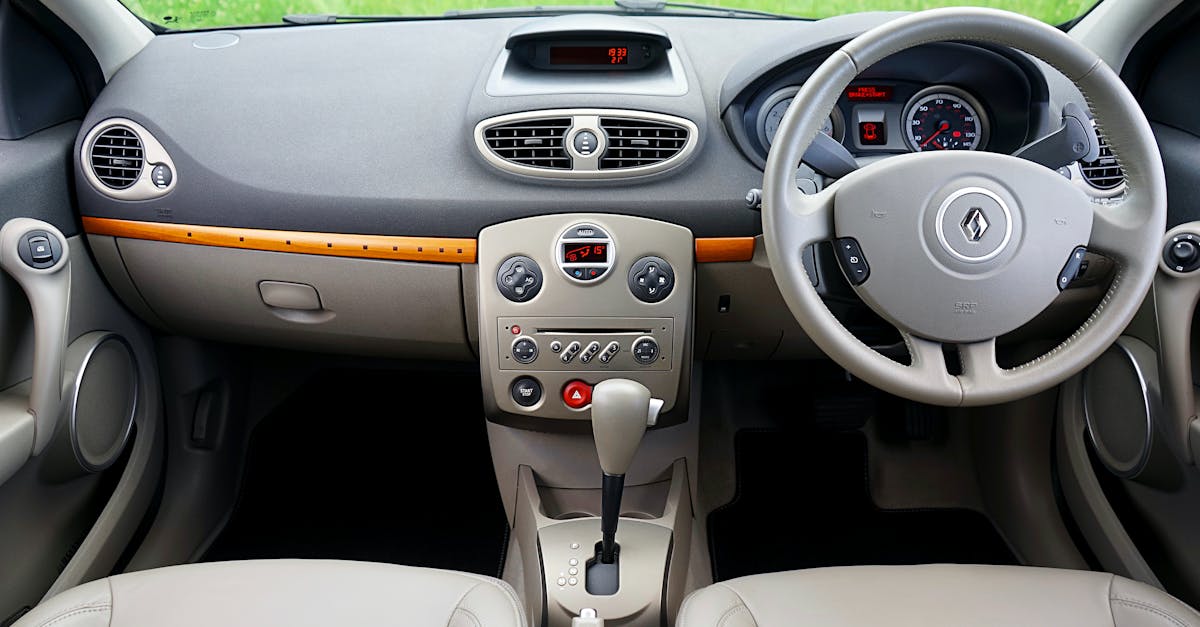
Summary: A detailed look at the Renault Zoe through 134 reviews
The Renault Zoe, a symbol of the modern electric car, arouses both enthusiasm and reservations. Since its first appearance, it has established itself as a benchmark in the field of all-electric city cars. With over 134 reviews, this article offers an in-depth analysis of its performance, durability, and flaws. The diversity of opinions allows us to create an accurate portrait of this car that has become essential, while explaining its strengths and limitations compared to the competition of 2025.
Summary
- Why the Renault Zoe is a benchmark in electric vehicles: context and innovations
- The advantages of the Renault Zoe: economy, design, and practicality
- The disadvantages highlighted by critics: comfort, braking, and air conditioning
- Reliability and durability of the Renault Zoe: what do owners say? The Driving Experience: Strengths, Sensations, and Areas for Improvement
- Questions to Ask Before Buying a Renault Zoe
- Alternatives to the Renault Zoe: Comparison and Outlook
- FAQ: Everything You Need to Know About the Renault Zoe in 2025
- Why the Renault Zoe is a Benchmark in Electric Vehicles: Context and Innovations
Since its initial launch in 2013, the Renault Zoe has marked a turning point in the automotive landscape by offering a truly accessible electric alternative. Its entry-level positioning has allowed a large population to discover zero-emission mobility, while benefiting from a competitive price. The car is part of a dynamic ecological transition and technological innovation, with a stated ambition: to make electric vehicles simple, practical, and sustainable.
With its first generations, the Renault Zoe incorporated technologies that were still pioneering on the market. Battery technology, intelligent energy management, connectivity, and modern design all contribute to making it both reliable and stylish.
Thanks to its authenticity and innovations, the Zoe continues to be a talked-about car, whether in specialized forums or in 2025 comparisons. Its battery capacity, range options, and new features have allowed Renault to remain at the top. Through these advancements, the Zoe remains an electric car that stands up to its competitors, such as the Peugeot e-208 or the Dacia Spring, often mentioned in reviews for their value for money.
Discover all the reviews and opinions on the Renault Zoe, the electric city car that combines performance and ecology. Explore the features, strengths and weaknesses, as well as user testimonials to make the best choice of electric vehicle.

Economically, the Renault Zoe boasts a very competitive running bill. With electricity costs significantly lower than those of a combustion engine, the car promises a considerable reduction in fuel costs. According to several owners, the only recurring cost is insurance, which is often affordable thanks to its low-cost family car category. Furthermore, in terms of maintenance, the Zoe requires few visits to the mechanic, which is a real plus for those looking to limit their operating budget.
The Zoe’s design, meanwhile, has always been appealing. Its modern, elegant look and dynamic lines place it at the top of the electric city car spectrum. The refocusing of the styling toward greater simplicity and refinement helps make it a car that stands up to competitors like the Mini Electric or the Peugeot e-208. Its practical interior, with an intuitive dashboard and optimized space, appeals to a young, urban audience. The customization capabilities also offer a touch of exclusivity appreciated by users.
The tests and reviews available on
Automobile Propre emphasize that the Zoe is particularly suited to urban and suburban use. Its small size makes it easy to find a parking space and drive in the city. Performance is responsive, especially on short trips, with efficient acceleration for quickly merging into traffic. 💡 Low running costs 🚗 Modern and elegant design
- 🔌 Easy to charge at home or at a station
- 🛠️ Reduced maintenance
- 🌱 Contribution to reducing the carbon footprint
- Drawbacks highlighted by reviewers: comfort, braking, and air conditioning
- Despite its many strengths, the Renault Zoe is not without its flaws, according to user reviews. The suspension often appears to be a weak point, especially when it comes to comfort over speed bumps or when driving around town. Passengers report a feeling of floating or insufficient damping, which can affect the overall comfort.
Regarding braking, several owners agree that the system can feel strange, even dangerous in certain situations: you often have to press hard on the pedal to slow down effectively, then release it abruptly. This phenomenon, sometimes described as harsh or inconsistent braking, remains a sensitive issue, especially for those who primarily drive in the city.
The air conditioning, which often raised expectations when it was first introduced, proves disappointing in practice. It cools, yes, but it’s not very powerful, and as soon as the outside temperature rises above 30°C, the Zoe tends to overheat, particularly due to the battery’s thermal management. This situation can become a handicap during long summer periods, making the driving experience a difficult compromise.
Another point mentioned concerns the quality of the interior materials, often considered below average. While the car doesn’t yet show obvious signs of deterioration, some witnesses note that wear is appearing faster than expected, particularly on plastics and assemblies, which can affect long-term durability.
Problem
Description
| Impact | Suspension | Exhibits limited comfort, especially on uneven roads |
|---|---|---|
| Useful for understanding that driving can become tiring over long distances | Braking | Unpredictable response, requires adaptation |
| Can become dangerous in heavy traffic or during emergency braking | Air Conditioning | Low power, overheating in summer |
| Limited thermal management in extreme conditions | Interior Materials | Rapid wear, moderate quality |
| Reduces perceived long-term durability | Reliability and durability of the Renault Zoe: what do owners say? | The question of reliability is central to any future Renault Zoe buyer. The majority of reviews come from |
specialized reviews
confirm a certain robustness, particularly for models with less than 100,000 km. The battery, which is one of the key components, remains efficient with a State of Health (SOH) of around 89% after 11 years of use, which is an excellent performance in the electrical field. However, certain defects can appear, especially with age. The Automobile Magazine forum mentions the need to regularly check certain points, such as thermal management or driving layout. However, the majority of owners attest that the Zoe handles well, whether in the city or on the highway, if maintenance is carried out properly. Recalls and known issues remain limited, but they mainly exist for early versions. Longevity seems assured if maintenance is properly maintained, particularly for the battery and electrical system. The Zoe’s durability, with its less stressed mechanical parts (no oil, no filter to change), is also one of its strong points in the review, hence its reputation as an economical and reliable electric car.
Criteria Evaluation Remarks
Battery life
| 89% SOH at 11 years | Good performance, little degradation | Common problems |
|---|---|---|
| Thermal management, material wear | Check especially after 8 years | Maintenance |
| Low cost, few mechanical parts | Mainly electric, no oil to change | Actual range |
| Approximately 150 km in summer for the original battery | Re-evaluated according to use and season | Driving experience: strengths, sensations, and areas for improvement |
| The Renault Zoe’s main distinguishing feature is its urban driving performance. Instant power, responsive start-up, and smooth acceleration are often enough to make driving enjoyable. Its low noise level, typical of an electric car, creates a peaceful and serene environment, ideal for daily commutes. | However, some drivers note that the suspension, which is less effective on rough roads, can affect comfort. Since sporty driving isn’t its strong suit, the Zoe prefers finesse when managing acceleration and braking. The Eco or Plus mode allows you to tailor the dynamics to your needs, but it remains, above all, a car designed for practicality and simplicity. 🛣️ Immediate responsiveness in the city | 🤫 Quiet and pleasant to drive |
🚧 Limited comfort on rough roads
🔋 Good range in standard conditions
🔥 Low power consumption
- Questions to ask yourself before buying a Renault Zoe
- Before purchasing a Renault Zoe, you should analyze certain points that could influence long-term satisfaction. The first concerns the intended use: if you’re looking for a car for long trips, the Zoe may require frequent charging. However, it excels in the city or suburbs, which limits its constraints in this regard.
- The initial budget is also an essential factor. The Zoe remains affordable, but it’s important to consider the cost of charging, possible battery replacement, and insurance. By 2025, various government incentives will facilitate the purchase of electric vehicles, such as those offered by the purchase aid schemes.
- Another aspect to consider is the nearby charging network or the one along your daily commute. Compatibility with fast charging stations, charging speed, and thermal management (especially during hot weather or harsh winters) are key elements to consider.
- ⚠️ Preferred urban or suburban use
💸 Budget for purchase and maintenance
🌍 Environmental impact
🔧 Ease of charging and range 🤝 Available grants and subsidiesAlternatives to the Renault Zoe: comparison and outlook
Given the Zoe’s popularity, other electric models like the Peugeot e-208, Dacia Spring, or even the Renault Clio Electric are options worth considering. The Peugeot e-208, available in both internal combustion and electric versions, offers sportier performance and a more fashionable design. Its range and technology remain similar to the Zoe, but often at a higher price. The more affordable Dacia Spring appeals with its attractive price and simplicity, but suffers from a less sophisticated design and reduced comfort. Its durability is comparable, although its battery may have long-term limitations under certain conditions. As for the electric Renault Clio, it offers an interesting compromise, combining space and technology, but often remains less competitive in terms of overall price.
- Strengths and weaknesses of the main competitors
- Model
- Range
- Approximate price
- Design
Strong points
Disadvantages
Peugeot e-208
≈ 340 km
| €35,000 | Sporty, elegant | High price, slower charging | Dacia Spring | ≈ 230 km | €18,000 |
|---|---|---|---|---|---|
| Simple, practical | Basic comfort, limited range | Electric Renault Clio | ≈ 300 km | €30,000 | |
| Modern, sober | Higher price than the Zoe | Each of these options offers a different price-performance ratio, and their choice will depend primarily on usage and budget. The trend for 2025 shows continued growth in these models, offering solutions increasingly suited to sustainable mobility. | https://www.youtube.com/watch?v=SXll_x67igk | FAQ: Everything you need to know about the Renault Zoe in 2025 | |
| What is the actual range of the Renault Zoe in 2025? | The standard battery generally provides a range of around 150 km in summer, but can drop to around 100 km in winter, depending on usage and weather conditions. | Is the Renault Zoe reliable in the long term? | Yes, if properly maintained, particularly for the battery, which has good durability, with limited SOH loss after 11 years. | What are the main faults to look out for? |
Suspension, braking, and air conditioning, especially during high temperatures or intensive use. Long-term interior quality must also be considered.
The Zoe requires little electrical maintenance, but budget for charging, possibly battery replacement after several years, and appropriate insurance.
- Is the Zoe suitable for off-road or long-distance driving? No, it is specifically designed for city and suburban driving. For long journeys, it is best to plan several charging stops and check compatibility with fast charging stations.