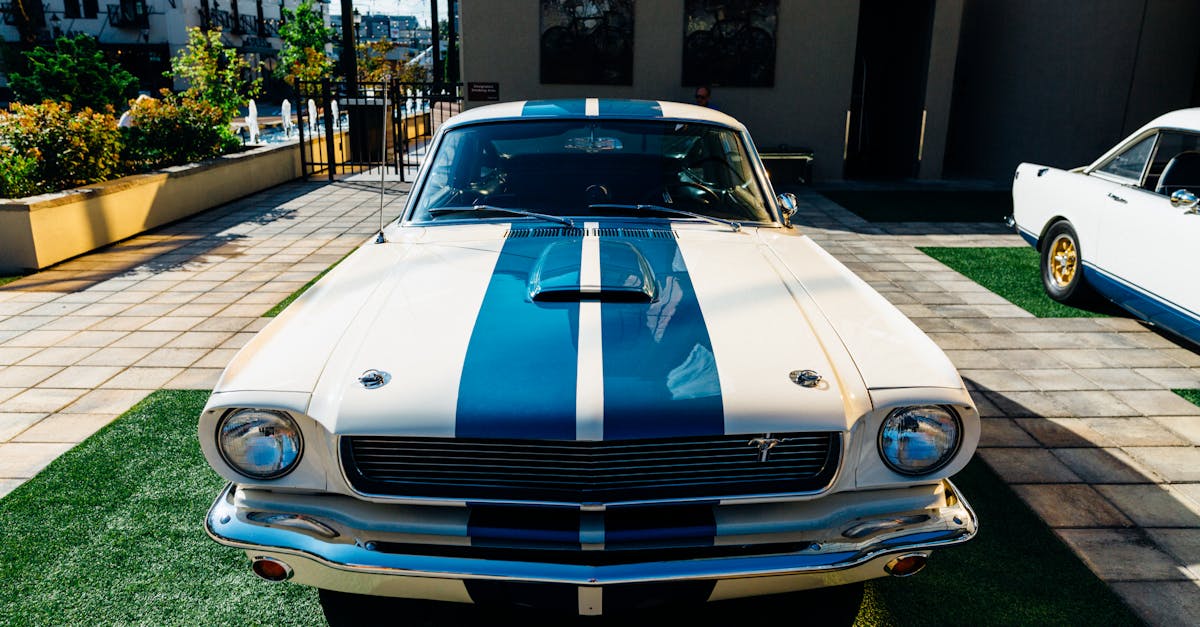
The Ford Mustang 1 (1964–1968): An American icon with a European design, starting at €22,000
Since its debut in 1964, the Ford Mustang has consistently embodied the very essence of the American muscle car, while also surprising visitors with its European-inspired styling. At the crossroads of raw power and refined lines, this first generation successfully combined performance and elegance in a model that remains an essential reference for vintage car enthusiasts today. While its legacy remains indelible in global automotive history, it is also its ability to evolve while maintaining a rare authenticity that confirms its iconic status. The 1964-1968 Mustang, highly sought after on the classic car market, is not just for its looks: it continues to attract buyers with its astonishing value for money, with an average purchase of €22,000 today. A real bargain for those looking to combine driving pleasure with a lasting investment. With its European design and unbridled performance, the Mustang 1 remains a benchmark for collectors and lovers of fine mechanics alike. It embodies a symbol of emancipation, freedom, and style, while remaining affordable in a rapidly changing market in 2025.

The very first Ford Mustang was launched after a period of intense competition in the automotive industry, particularly in the face of the rise of small European cars in America. Eager to respond to this trend while offering an innovative product, Ford implemented a bold strategy. The genesis of this legendary car dates back to the 1960s, when the American manufacturer sought to revitalize its image while conquering a nascent market segment: affordable, practical, and sporty personal cars. The cultural and economic context of the time played a key role in this craze. Young people, in the midst of an economic boom, wanted vehicles capable of combining style, performance, and a reasonable price. At the same time, European competition, through models such as the Porsche 356 and the Citroën DS, exerted a definite influence. Ford therefore wanted to create a car that would seduce as much with its glamorous look as its dynamic capabilities. The strategy is clear: offer a car with a European design, previously reserved for classics from the Old Continent, while maintaining American robustness and performance.
Criteria
Value / Description
| Launch Year | 1964 |
|---|---|
| Launch Price | $2,368 (approximately €22,000 in 2025) |
| Segment | Affordable Sports Car / Muscle Car |
| Design | European elegance, elongated profile, long hood |
| Motivations | React to the VW Beetle & attract new young consumers |
| Strategy | Personalized offer, competitive price, European look |
| An iconic silhouette: a European-inspired body, but an American heart | What gives the Ford Mustang its immediate charisma is undoubtedly its carefully thought-out design, blending European influences with a resolutely American identity. The elongated silhouette, with its clean lines and long hood, evokes refinement and sportiness, while remaining practical for urban driving and the open road. The Mustang was part of a drive to differentiate itself from other American cars of the time, which were often massive and ill-suited to large cities or the desire for customization. |
Designers David Ash and John Oros aimed to give this car an « exotic » look, while maintaining a certain simplicity that would facilitate mass production. The body, initially available as a coupe and convertible, stands out with its flowing lines, harmonious curves, and elegant details. The front end, with its wide grille and round headlights, is inspired by European prototypes from the 1960s, while the rear end, featuring vertical taillights, gives the car a strong visual identity. Long and low profile for a dynamic look
Two-tone or solid paint finish depending on the options
Few unnecessary embellishments for a sleek aesthetic
- Wide range of colors for maximum customization
- Finish options, from the simplest to the most luxurious
- Discover the legendary Ford Mustang: an American icon combining power, style, and performance. Explore its features, iconic design, and automotive heritage.
- Performance and technology: a muscle car at the top of the range
- What makes the Mustang a true legend is its ability to combine power and lightness in a simple yet efficient architecture. From its launch, it offered a diverse range of engines to satisfy all tastes, from the most urban to the most sporty. The base version was equipped with a 2.8-liter inline-6 engine, producing 101 hp, ideal for everyday driving. But the range quickly evolved to more powerful V8s, with some 1967 models producing up to 271 hp.

Power
Top Speed
Acceleration 0-100 km/h
| 2.8L 6-cylinder | 101 hp | 160 km/h | ≈ 14 s |
|---|---|---|---|
| 4.3L V8 | 164 hp | 180 km/h | ≈ 10 s |
| 4.7L V8 | 200 hp | 185 km/h | ≈ 8 s |
| Limitless Customization: Every Enthusiast’s Dream | What makes the Mustang so attractive is its ability to be customized to the fullest. The range of options at the time was vast, allowing owners to create a unique car. The configuration could include elements such as a GT kit, alloy wheels, a leather interior, or even a performance pack. The option of selecting a manual or automatic transmission offered additional driving pleasure, often favored by enthusiasts of vintage sports cars. V8 or 6-cylinder options | Standard or racing finishes (GT, Shelby) | Various colors, two-tone or solid paint |
Leather or fabric interiors with modern amenities (for the time)
Performance accessories: disc brakes, sport suspension, etc.
- Discover the Ford Mustang, an icon of performance and style, combining power and distinctive design. Immerse yourself in the world of sports cars with its high-powered engine and iconic lines, and experience an unparalleled driving experience.
- The classic car market: between value, collection, and investment
- In 2025, the first-generation Ford Mustang continues to attract collectors and classic car enthusiasts. Its popularity continues unabated, particularly due to its timeless aesthetics and solid, well-maintained mechanics. The value of these models has exploded in recent years, with prices ranging from €22,000 for a standard version to nearly €80,000 for a rare or perfectly restored example, including the iconic Bullitt.
- What makes the difference in their value is their authenticity, the quality of the restoration, and the rarity of the model or specific option. Demand for these cars, with their vintage and timeless look, often exceeds their initial value, making them an excellent investment. This is a major selling point for those looking to combine driving pleasure with a heritage investment in a booming market.
- Model Type

Key Points
6-Cylinder Coupe
≈ €22,000
| Resonance, mechanical condition, authenticity | V8 Convertible | ≈ €26,000 |
|---|---|---|
| Popularity, rarity, period options | 1967-1968 Fastback | ≈ €48,000 |
| Facelift, increased power, collectible | Bullitt | ≥ €80,000 |
| Film tribute, concours condition | Rare versions and collectible value: what to look for? | To maximize your investment, choose Mustangs preserved in their original configuration, with faithful mechanics and a body in perfect condition. Their stable value depends on meticulous maintenance, their history, and their rarity. Models that have belonged to collectors or have been used in events are also highly sought after. The « Bullitt » version, made famous by the Steve McQueen film, is a perfect example of a sought-after model on the vintage market, with a price tag that can exceed €80,000. |
| Restoration should always aim to respect the original condition, as a modified or disguised car quickly loses its value. Spare parts, abundant online, facilitate maintenance, but the key remains orderly documentation to trace the car’s history. Impacts and Challenges of the Mustang Market in 2025: Sustainability, Restoration, and Passion | The vintage market is experiencing exponential growth, driven by a desire to preserve automotive history while freeing itself from modern constraints. The Ford Mustang 1 is at the forefront of this trend, with an active community of enthusiasts, clubs, and international exhibitions. However, sustainability remains a crucial issue. Restoration, often costly, must respect the original condition to preserve value. The availability of spare parts and the cost of maintenance are becoming decisive factors in the longevity of these collector cars. | Many enthusiasts now rely on restoration specialists who are capable of bringing these cars back to life without compromising their authenticity. The digitalization of their history and precise documentation have become essential criteria in selecting a model to purchase. The Mustang, both a symbol of freedom and performance, continues to fascinate while confronting the challenges linked to the conservation of vehicle heritage in 2025. |