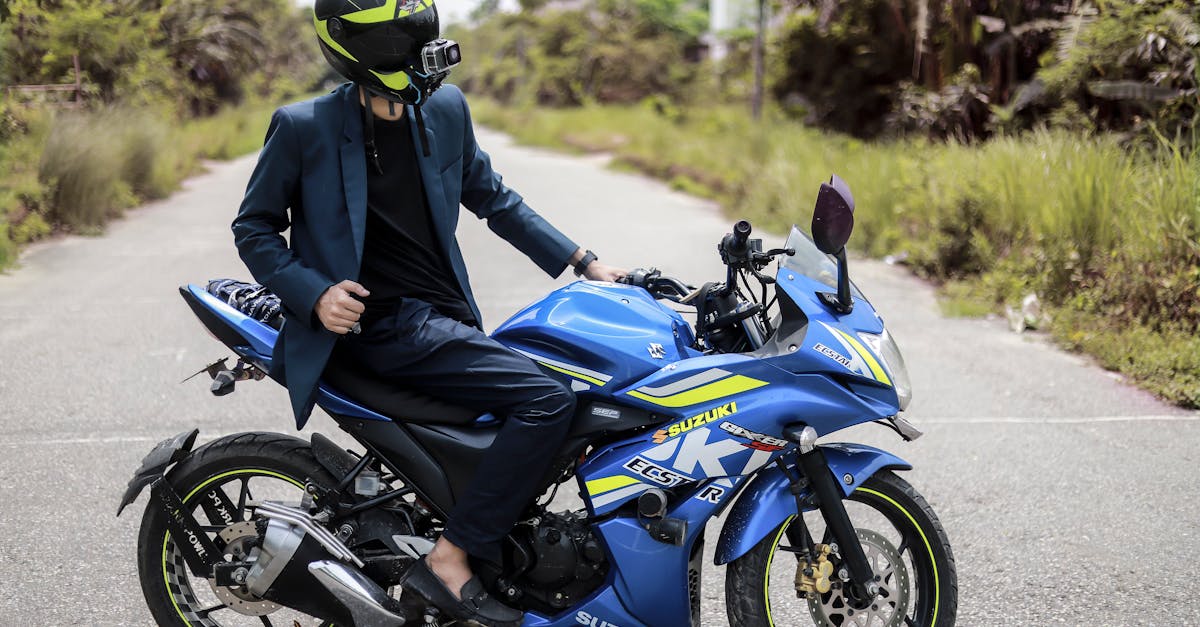
An unexpected announcement: Is Suzuki preparing its return to the hypersport segment in 2025?
For several years, the European sportbike scene has been dominated by models such as the Yamaha R1, Kawasaki ZX-10R, Honda CBR1000RR, Ducati Panigale V4, KTM RC8, BMW S1000RR, Triumph Daytona, MV Agusta F4, and Aprilia RSV4. Each of these machines embodies a certain heritage, a legitimacy acquired through years of competition and technological innovation. Yet, in the midst of this fierce competition, the Suzuki GSX-R 1000, once at the top of the range, seems to have disappeared from the European landscape. The latest version left dealerships in 2021, leaving a void behind.
Despite this absence, persistent rumors point to an imminent return. With the regulatory environment becoming more stringent, particularly the Euro 5 standard, Suzuki has seemingly found the opportunity to re-enter the market with a reinvented model. President Toshihiro Suzuki himself hinted in an interview that the famous Suzuki GSX-R 1000 could make a strategic comeback in 2025 thanks to an engine adapted to European standards. Fans of Japanese sports bikes are eagerly awaiting official confirmation, but the signals sent by the brand seem very encouraging. The central question is: will this revival live up to Suzuki’s historic legacy, or will we have to settle for a pale imitation?
Regulatory issues: how the Euro 5 standard is disrupting the future of the Suzuki GSX-R 1000
European environmental regulations have become a real challenge for manufacturers, particularly those operating in the hypersport segment. The Euro 5 standard, in effect since 2020, imposes strict limits on pollutant emissions, which has directly resulted in the discontinuation of many iconic models. Suzuki, like its competitors Kawasaki, Yamaha, and Honda, has had to face this reality. The GSX-R 1000, which enjoyed its best years between 2005 and 2017, was one of the iconic models of that era, boasting impressive power and a recognizable sound. However, by failing to meet the new standards, Suzuki was forced to withdraw its models from the market. The 2020 version, for example, already symbolized the end of a generation, leaving fans waiting for a compliant technological update. The challenge for Suzuki now is to develop a new engine that complies with regulations while maintaining the sporting spirit and performance that made the GSX-R so famous.
This process is proving complex, as it requires not only reducing emissions but also maintaining sufficient power to keep up with the competition. The solution could involve integrating advanced engine management systems, using innovative materials, or even adopting a state-of-the-art cooling system. The upcoming EICMA 2025 show could thus reveal this strategic shift, which will give new hope to any sports bike enthusiast. The increasing importance of homologations and the need for technological innovation will therefore be essential if Suzuki is not to be left behind in the market, where Kawasaki, Yamaha, Ducati, and MV Agusta will not remain passive.
Key Factor
| Impact on the GSX-R 1000 | Competitive Example | Euro 5 Standard |
|---|---|---|
| Obligation to reduce power and optimize combustion | Kawasaki ZX-4RR 300 km/h | Emissions technologies |
| Integration of optimized catalysts and advanced electronic management systems | Yamaha R1 Reference | Maintenance |
| Adaptation to more durable components to limit costs | New Suzuki GSX-R | Technological advances: will the Suzuki GSX-R 1000’s new engine be a revolution? |
To return to the market, Suzuki will have to showcase a major innovation. The new Suzuki GSX-R 1000 promises to be in line with modern sports bikes, thanks to an advanced technological platform. The question is: what innovations will make all the difference?
Since the last generation, competition has evolved rapidly. Kawasaki introduced the ZX-4RR with a 300 km/h engine, Yamaha continues to improve its R1, and Ducati is positioning itself with its ultra-high-performance V4s. Suzuki must therefore rise to the challenge by offering a more compact, more powerful, and cleaner engine. The next GSX-R 1000 could thus feature an electronic fuel injection engine, combining energy efficiency and raw performance.
Another crucial aspect concerns electronic management. The new machine could benefit from a traction control system, customizable riding modes, and rider assistance features. These elements, already present on the BMW S1000RR and Aprilia RSV4, provide considerable advantages in terms of safety and riding pleasure.
It’s a shame that some aspects of these innovations annoy some purists, who miss the mechanical simplicity of yesteryear. However, the trend is now towards the digitalization of the sportbike world. The question remains: will the new Suzuki GSX-R 1000 find the right balance between tradition and modernity?
To better appreciate these developments, it’s also essential to observe how other manufacturers are innovating, particularly MB Agusta and Triumph, renowned for their technical expertise and unique design.
Design and aerodynamics: will the Suzuki GSX-R 1000 adapt to current trends?
The design of a sports bike plays a decisive role in its appeal. With the rise of models like the Kawasaki ZX-4RR, Ducati Panigale V4, and Yamaha R1, it’s becoming clear that aesthetics and aerodynamics are at the heart of development. The question, then, is: will the new GSX-R 1000 be able to adapt to these standards while maintaining a strong identity?
One thing is certain: the silhouette must combine aggressiveness and functionality. The look must recall the past while promoting uncompromising modernity. The fairing line, for example, could draw inspiration from current models, with a sharp front end, integrated aerodynamic wings, and a streamlined handlebar to increase stability at high speeds.
Aerodynamics are crucial for stability and top speed. The next GSX-R could therefore incorporate winglets, discreet spoilers, or ultralight materials to improve handling. The goal is to reduce drag while allowing the rider to feel comfortable in all conditions.
As well as visually elegant, the design must also incorporate innovative elements that provide a clear differentiation: integrated LEDs, sensors for wind control, or the integration of modern graphics. Successfully managing these elements will depend on Suzuki’s ability to combine tradition and aesthetic innovation, to win over an audience as demanding as the segment’s experts.
The expectations of fans and specialists regarding a possible comeback of the GSX-R 1000
The potential return of the Suzuki GSX-R 1000 is generating high expectations among both endurance enthusiasts and racers. The bike has left a lasting impression on fans, particularly thanks to its Superbike performance and championship victories. Its withdrawal from the European market was seen as a blow to those who value pure sportiness. The model’s revival in 2025 could therefore represent a true renaissance.
Fans are especially eager for a machine that perfectly balances power, lightness, and riding comfort. The competition, including the Kawasaki ZXR-10R, Yamaha R1, and Honda CBR1000RR, may not be impressive, but their advanced technology offers a real challenge.
For these fans, it’s not just raw performance that matters. Reliability, ease of maintenance, and track-readiness are equally important. The sum total of these criteria will determine whether Suzuki can meet expectations or crumble in the face of well-established competition. Discussions on specialized forums, particularly
[Read more
], reflect this passion. Most see it as a real hope, but also as pressure for Suzuki to not simply dismiss this return as a mere PR stunt. A planned event at EICMA 2025: an event not to be missedThe global motorcycle scene eagerly awaits the 2025 edition of EICMA, the Milanese two-wheeler event. It is in this context that Suzuki could officially unveil the new GSX-R 1000, marking the long-awaited comeback. Rumors are already piling up, suggesting a grand presentation, with a completely redesigned model, compliant with new standards, yet faithful to the brand’s sporting DNA.
For Suzuki, it’s also a strategic showcase. The competition isn’t waiting, and KTM, Ducati, and MV Agusta all have plans to boost their ranges in 2025. The Japanese company must therefore demonstrate creativity and boldness to appeal to both purists and new consumers.
The stakes are immense: relaunching the range with a model that combines performance, style, and modernity. All this in a market where demand for efficient and environmentally friendly sports bikes is growing rapidly. Other manufacturers also see this as an opportunity to launch major new models, notably Honda with its new Fireblade, or Triumph with its hybrid models.
Anticipation is at its peak, and many observers are suggesting that Suzuki could present a GSX-R 1000 with unprecedented innovations, particularly in electronic control and weight reduction. The date is set: November 2025, and everything suggests that this deadline will also mark a turning point for its other sports models.
https://www.youtube.com/watch?v=6kv3Yg_Qy9c
What strategy will Suzuki adopt in the face of its main competitors?
Kawasaki, for example, is banking on an ultra-high-performance engine with its ZX-10R, capable of reaching speeds in excess of 300 km/h and meeting all standards. Yamaha, meanwhile, is focusing on exemplary stability with an R1 equipped with a rider assistance system and a futuristic design. Honda, true to its standards, is already working on a new CBR1000RR equipped with a hybrid electric mode to reduce its environmental impact.
For their part, Ducati, Aprilia, and Triumph are seeking to conquer new segments with models combining technology and aesthetics. Suzuki’s strategy will therefore have to rely on several levers to differentiate itself:
🔧 Technological innovation
🎨 Modern and distinctive design
- ⚡ Sporty performance and reliability
- 🌱 Compliance with environmental standards
- 🤝 Strengthened distribution network
- The stakes are high, and the brand will also have to rely on its heritage values to attract its long-standing customers. The competition, notably Kawasaki, Yamaha, and Honda, will not be giving it any concessions, but the rebirth of the Suzuki GSX-R 1000 could then change the situation, notably by revitalizing the entire sports bike range, as also demonstrated by the recent trend towards electrification or hybrid models, mentioned by
- [See also
]. Frequently Asked Questions (FAQ) about the potential return of the Suzuki GSX-R 1000 When could the Suzuki GSX-R 1000 return to the European market?The brand has mentioned a presentation at EICMA 2025, with a possible release in early 2026.
What will differentiate the new GSX-R from its predecessors?
- A modern engine, advanced electronics, and a more aerodynamic design will be at the heart of the project. Will the GSX-R 1000 be able to compete with Kawasaki and Yamaha?
- Yes, if Suzuki manages to combine performance, innovation, and compliance with standards, it could regain its place in the market. What are the main challenges for Suzuki in this return?
- Compliance with Euro 5 standards, technological competition, and retaining existing customers. Are there any competing models to watch out for? The Kawasaki ZX-10R, the Yamaha R1, the Ducati Panigale V4 and the MV Agusta F4 represent formidable references that should not be underestimated.